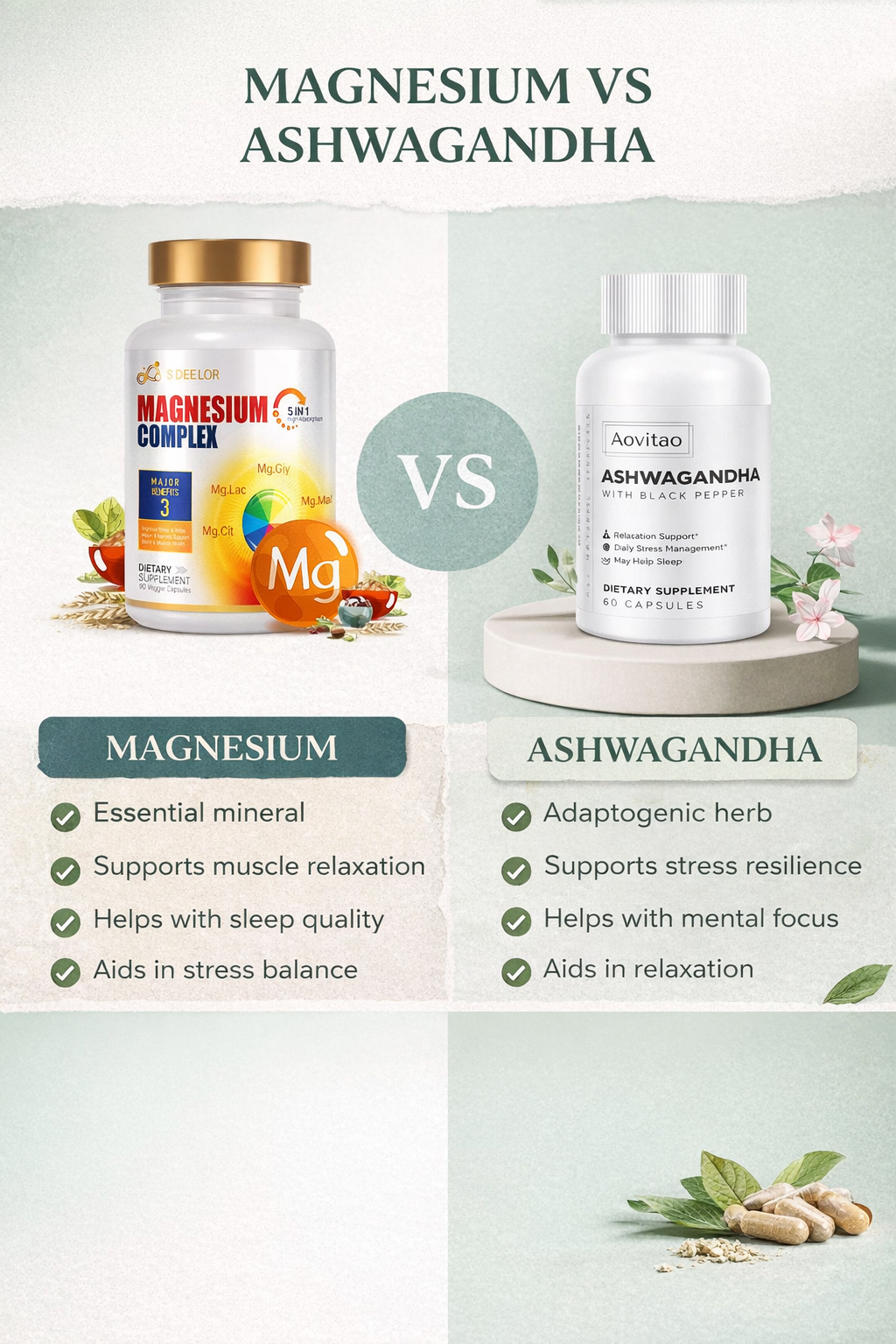
When it comes to supporting stress balance and better sleep, two popular options often come up: magnesium and ashwagandha. Both are widely used in wellness routines, but they work in different ways.
If you’re wondering which one might fit your needs, here’s a simple comparison to help you understand the differences.
What Is Magnesium?
Magnesium is an essential mineral involved in hundreds of functions in the body. It plays a role in muscle relaxation, nerve function, and energy production.
Many people use magnesium supplements to support:
Muscle relaxation
Nervous system balance
Sleep quality
General wellness
Magnesium is often included in nighttime routines because of its association with relaxation and calmness.
What Is Ashwagandha?
Ashwagandha is an adaptogenic herb traditionally used to help the body manage stress. Adaptogens are known for supporting the body’s ability to respond to physical and emotional stressors.
People commonly use ashwagandha to support:
Stress balance
Emotional well-being
Mental focus
Energy and resilience
Unlike magnesium, which is a mineral, ashwagandha works by supporting the body’s stress response system.
Key Differences Between Magnesium and Ashwagandha
| Magnesium | Ashwagandha |
|---|---|
| Essential mineral | Adaptogenic herb |
| Supports muscle and nerve function | Supports stress response balance |
| Often used for sleep and relaxation | Often used for stress and resilience |
| Found in foods like leafy greens and nuts | Derived from plant root |
Magnesium may be helpful for those focusing primarily on physical relaxation and sleep routines, while ashwagandha may be chosen by those looking for stress resilience and emotional balance.
Can You Take Magnesium and Ashwagandha Together?
Some wellness routines include both, since they support different systems in the body. However, combining supplements should always be discussed with a healthcare professional to ensure safety and appropriateness for your individual needs.
How to Choose the Right Option
Consider your primary goal:
If you’re focusing on muscle tension or nighttime relaxation → magnesium may align with your routine.
If you’re focusing on stress balance and mental resilience → ashwagandha may be worth discussing with your healthcare provider.
In some cases, your provider may suggest one, the other, or a combination based on your personal health profile.
Important Disclaimer
The information in this article is for educational purposes only. My True Well does not provide medical advice, diagnosis, or treatment. Always consult a qualified healthcare professional before starting or combining supplements, especially if you are pregnant, nursing, taking medication, or managing a medical condition.
Final Thoughts
Both magnesium and ashwagandha are popular wellness supplements, but they serve different purposes. Understanding how each works can help you make informed decisions that align with your daily wellness goals.
At My True Well, we believe thoughtful choices and consistent routines create lasting balance.
✨ Wellness starts with understanding your body.
